Responding to a Growing Challenge
SJTBTC Staff and Students Attend National Pastoral Response to Drugs Workshop
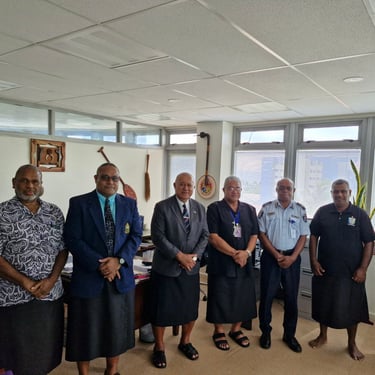
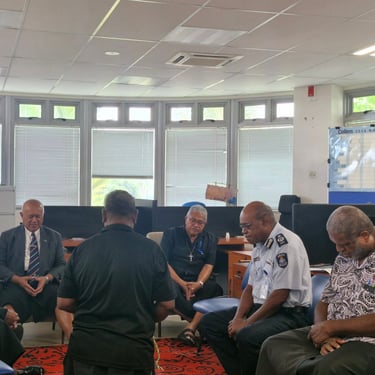
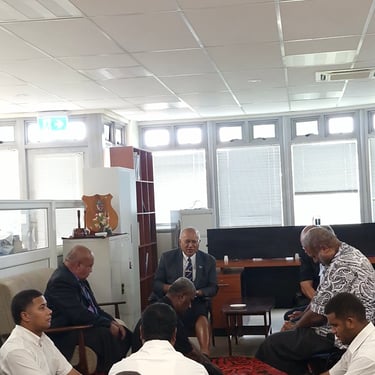
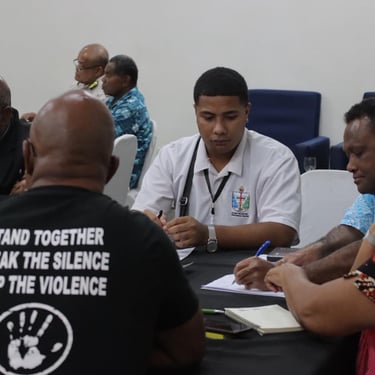
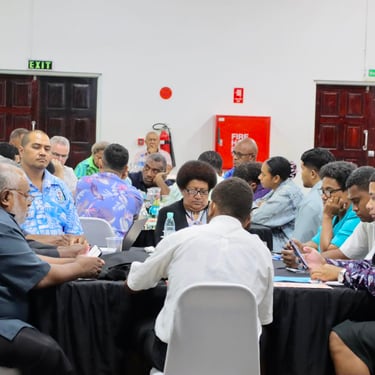
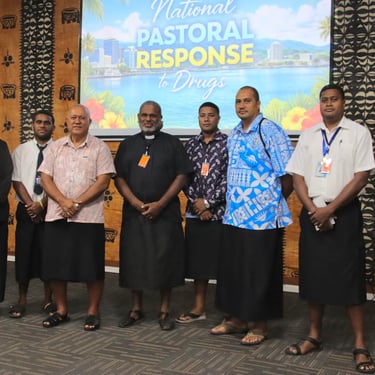
Staff and students of St John the Baptist Theological College (SJTBTC) recently attended a National Pastoral Response to Drugs Workshop, following an invitation from the Ministry of Policing. The Fiji Council of Churches hosted the workshop in partnership with the Pacific Conference of Churches and the Ministry of Policing, bringing together church leaders, community representatives, and government partners to address the growing concern of illicit drug activity in the region.
The College community participated in the workshop as representatives of the Anglican Diocese of Polynesia, standing in solidarity with other churches and organisations committed to confronting the serious challenge posed by drugs within our communities.
Participants heard sobering insights about the current situation in the Pacific. The region has increasingly become a lucrative drug corridor, driven by international cartels, criminal organisations, and local gangs. Because of the Pacific’s geographical location along major maritime trade routes, both licit and illicit shipping lanes cross through the ocean that connects our island nations. As a result, the Pacific Islands are vulnerable to being used as transit points in what many now describe as a “drug highway.”
Tragically, this trafficking does not remain only in transit. Increasingly, illicit drugs are spilling into domestic markets across the Pacific, including within island communities. Drugs have begun to reach the very heart of our villages and parishes, threatening families and especially the well-being of young people. Many communities are now facing the social, spiritual, and health impacts of drug distribution and substance abuse.
The workshop emphasized the urgent need for regional cooperation, awareness, and adaptive responses from governments, community organisations, and churches. Faith communities in particular play a critical role in providing pastoral care, education, prevention, and support for individuals and families affected by drugs.
For the Church, responding to the drug crisis is not only a social responsibility but also a pastoral and theological calling. The Church is present in the life of communities at the grassroots level, where the impacts of drugs are often most visible. Clergy and church leaders are therefore called to stand alongside families, guide young people, and promote life-giving alternatives grounded in faith, dignity, and hope.
The participation of SJTBTC staff and students reflects the strong commitment of the Archbishop and the Diocese of Polynesia to be at the forefront of addressing the drug crisis—not only in Fiji but across the wider diocesan region and the Pacific. Through formation, education, and pastoral engagement, the Diocese seeks to equip its clergy and communities to respond faithfully and effectively to this pressing challenge.
For the ordinands of the College, attending this workshop was an important learning opportunity. As future priests, they will serve communities where these issues are increasingly present. Understanding the realities surrounding drug use and trafficking in the Pacific equips them to minister with greater awareness, compassion, and responsibility.
The Church continues to pray and work toward communities where young people are protected, families are supported, and hope is restored. Through collaboration with partners such as the Fiji Council of Churches, the Pacific Conference of Churches, and the Ministry of Policing, the Anglican Church remains committed to standing with the people of the Pacific in confronting the challenges posed by illicit drugs and building healthier, safer communities for the future.